
Advanced Catalytic Materials: Powering the Future of Clean Energy and Sustainable Industry
Introduction
Advanced catalytic materials are playing an increasingly important role in modern chemical processing, clean energy production, environmental protection, and sustainable manufacturing. From hydrogen generation and fuel cells to emission control and industrial chemical production, catalysts enable chemical reactions to occur faster, more efficiently, and with lower energy consumption.
As industries face increasing pressure to reduce emissions, improve energy efficiency, and transition toward cleaner technologies, the development of high-performance catalytic materials has become a major area of innovation.
This article explores what advanced catalytic materials are, how they work, the different types available, and their growing importance in the future of sustainable industry.
What Are Catalytic Materials?
A catalyst is a material that increases the rate of a chemical reaction without being permanently consumed during the reaction.
Catalytic materials work by providing an alternative reaction pathway with a lower activation energy. This allows chemical reactions to occur more efficiently, often at lower temperatures or pressures.
Modern catalysts are engineered to optimize properties such as:
- Surface area
- Porosity
- Active site density
- Chemical stability
- Thermal resistance
- Selectivity
- Mechanical strength
- Resistance to poisoning and degradation
Advanced catalytic materials combine materials science, nanotechnology, chemistry, and chemical engineering to deliver higher performance than conventional catalyst systems.
How Do Advanced Catalysts Work?
The performance of a catalyst depends largely on its surface.
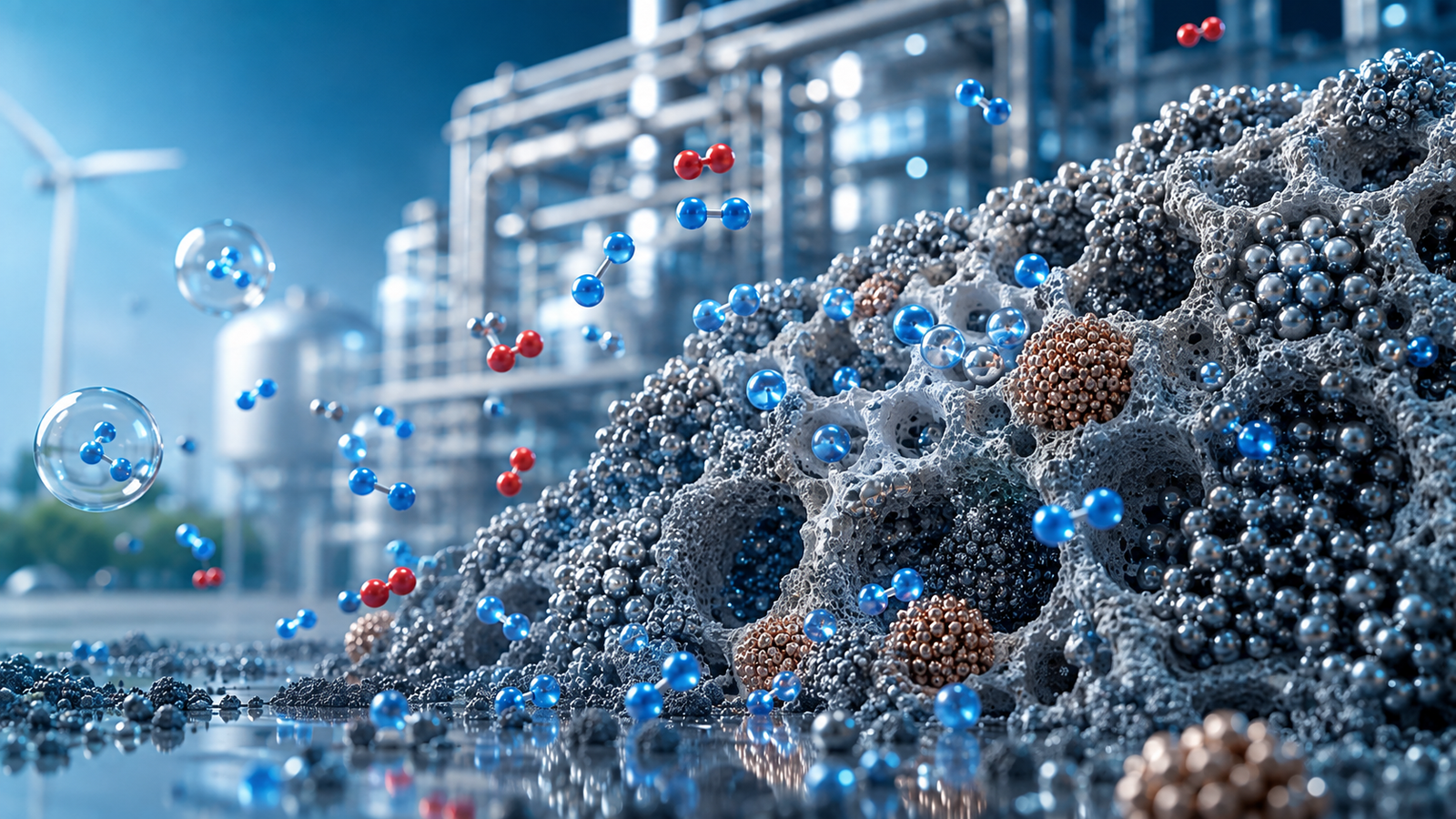
Chemical reactions typically occur at specific locations known as active sites. Reactant molecules interact with these active sites, where chemical bonds can be weakened, broken, or rearranged to form new products.
The general catalytic process can be described in several stages:
1. Adsorption
Reactant molecules attach to the surface of the catalyst.
2. Surface Interaction
The catalyst facilitates the chemical transformation by reducing the energy required for the reaction.
3. Reaction
Chemical bonds are broken and new bonds are formed.
4. Desorption
The reaction products are released from the catalyst surface.
5. Catalyst Regeneration
The catalyst becomes available to participate in another reaction cycle.
The ability to maximize the number of accessible active sites is one of the key reasons why advanced porous and nanostructured catalysts are so effective.
Types of Advanced Catalytic Materials
Metal-Based Catalysts
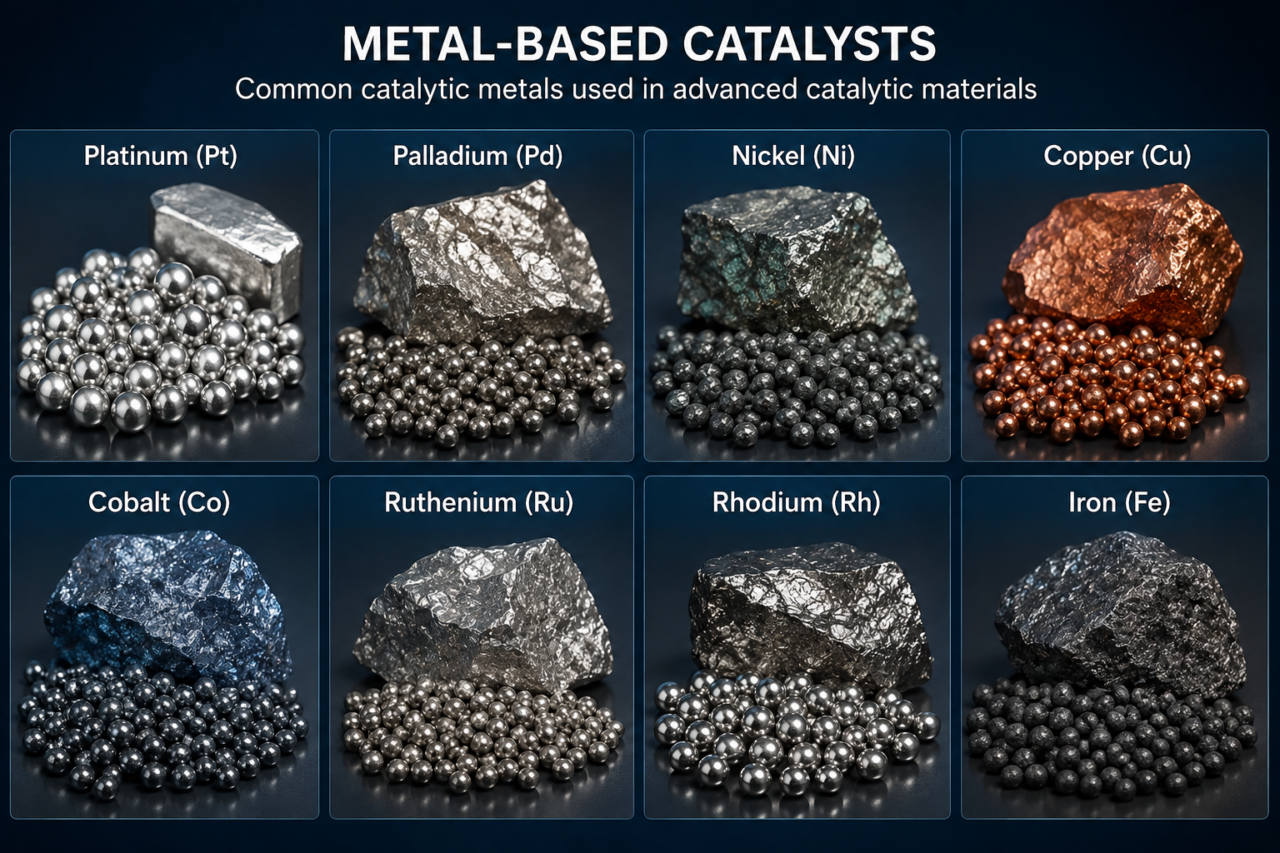
Metal catalysts are widely used because many metals can efficiently promote chemical reactions.
Common catalytic metals include:
- Platinum
- Palladium
- Nickel
- Copper
- Cobalt
- Ruthenium
- Rhodium
- Iron
These materials may be used as nanoparticles, coatings, supported catalysts, or part of more complex catalytic structures.
Platinum and palladium, for example, are widely known for their catalytic activity in hydrogen-related technologies, fuel cells, chemical synthesis, and emission control.
Nickel-based catalysts are commonly used in hydrogen production, reforming processes, and various industrial chemical reactions.
Metal Oxide Catalysts
Metal oxides are important catalytic materials because they can provide excellent thermal stability, oxygen storage capacity, and chemical resistance.
Common examples include:
- Aluminum oxide
- Titanium dioxide
- Cerium oxide
- Zirconium oxide
- Iron oxide
- Vanadium oxide
Metal oxide catalysts are widely used in environmental applications, oxidation reactions, chemical processing, and energy-related technologies.
They can also act as catalyst supports, helping disperse active metal particles across a larger surface area.
Porous Catalytic Materials
Porosity is one of the most important characteristics of modern catalyst design.
Porous catalysts contain networks of microscopic pores that increase the available surface area.
This structure allows more reactant molecules to reach active sites.
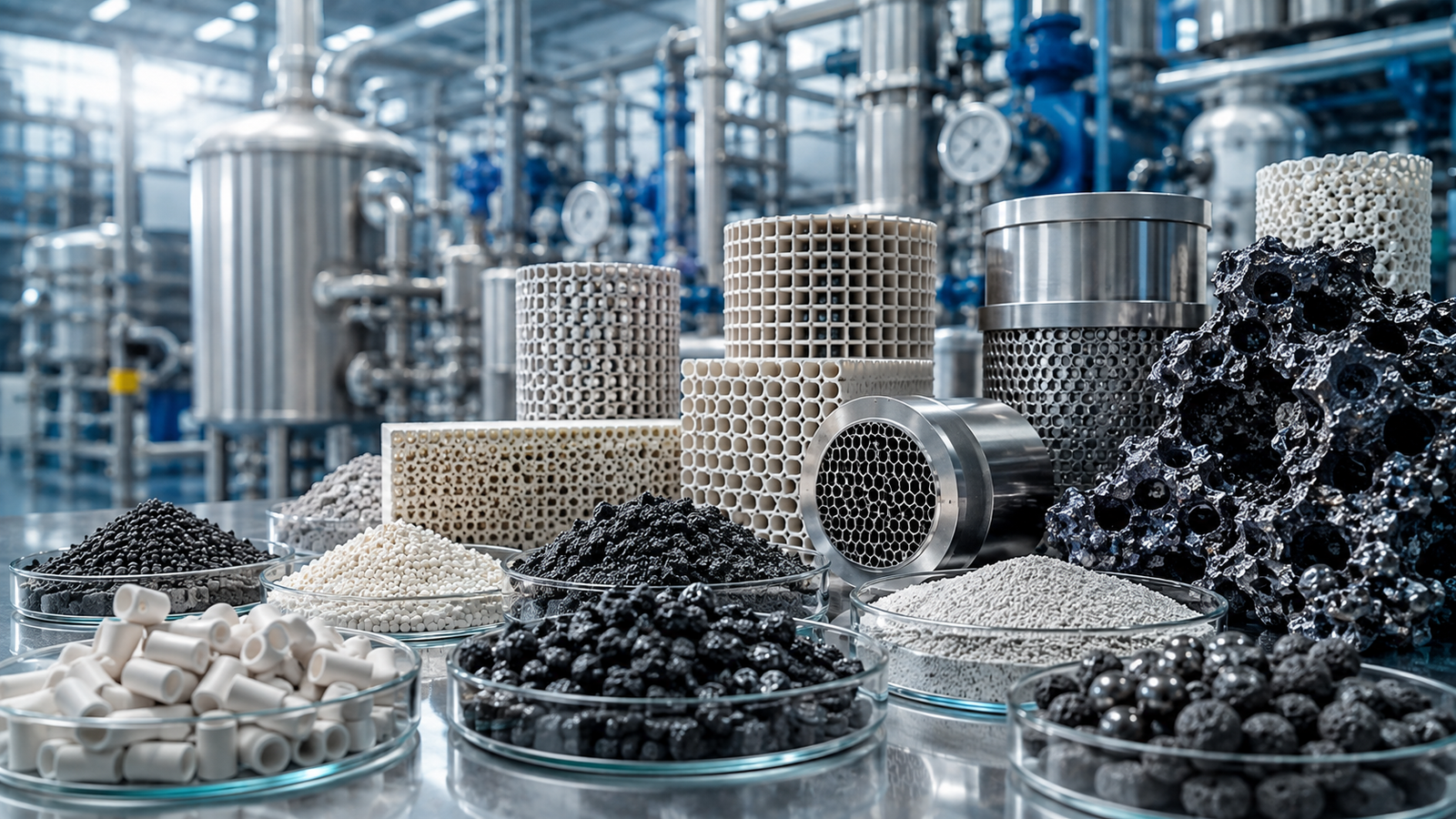
Porous catalytic materials may include:
- Activated materials
- Zeolites
- Porous ceramics
- Metal-organic frameworks
- Structured catalyst supports
- Mesoporous materials
The design of pore size and structure can significantly influence catalyst performance, selectivity, and mass transport.
Nanostructured Catalysts
Nanotechnology has transformed catalyst development.
Nanoparticles provide extremely high surface-area-to-volume ratios, meaning a greater proportion of atoms are available at the surface to participate in chemical reactions.
Nanostructured catalysts can be engineered to control:
- Particle size
- Surface composition
- Crystal structure
- Active site distribution
- Electronic properties
- Stability
This enables scientists and manufacturers to design catalysts for highly specific chemical reactions.
Catalyst Supports and Structured Substrates
In many industrial applications, the active catalytic material is deposited onto a support structure.
The support may provide:
- Mechanical stability
- High surface area
- Improved heat transfer
- Better distribution of active materials
- Enhanced resistance to degradation
Common catalyst support materials include ceramics, alumina, silica, carbon-based materials, and metal oxides.
Structured catalysts may also use:
- Honeycomb monoliths
- Porous ceramic structures
- Catalyst pellets
- Extruded materials
- Coated metallic substrates
These structures are particularly valuable in large-scale industrial systems where gas flow, pressure drop, heat transfer, and mechanical durability must be carefully controlled.
Advanced Catalytic Materials for Hydrogen Production
Hydrogen is expected to play an important role in the transition toward cleaner energy systems.
Catalysts are essential in several hydrogen-related processes, including:
- Water electrolysis
- Steam methane reforming
- Ammonia decomposition
- Hydrogen purification
- Fuel cell reactions
In water electrolysis, catalytic materials help accelerate the reactions involved in splitting water into hydrogen and oxygen.
Advanced catalysts are being developed to improve:
- Hydrogen production efficiency
- Energy consumption
- Catalyst lifetime
- Use of lower-cost materials
- Scalability of clean hydrogen technologies
Research is increasingly focused on reducing dependence on expensive precious metals while maintaining high catalytic activity.
Catalysts in Fuel Cell Technologies
Fuel cells convert chemical energy directly into electrical energy.
Catalysts are critical to the electrochemical reactions occurring inside fuel cells.
Advanced catalytic materials can help improve:
- Power output
- Energy efficiency
- Durability
- Startup performance
- Material utilization
Nanostructured platinum-based catalysts remain important in many fuel cell systems, while research continues into alternative materials that could reduce cost and improve long-term stability.
Environmental Applications
Catalytic materials are also essential for reducing environmental pollution.
Catalysts are widely used in:
- Automotive emission control
- Industrial exhaust treatment
- Volatile organic compound removal
- Carbon monoxide oxidation
- Nitrogen oxide reduction
- Waste treatment
Advanced catalysts can convert harmful pollutants into less harmful substances before they are released into the environment.
For example, catalytic systems are used to transform carbon monoxide, nitrogen oxides, and unburned hydrocarbons into more environmentally acceptable products.
Improving Industrial Energy Efficiency
One of the most important benefits of catalytic technology is the ability to reduce the energy required for chemical reactions.
Traditional chemical processes may require:
- High temperatures
- High pressures
- Large amounts of energy
- Long processing times
An effective catalyst can reduce these requirements.
This can lead to:
- Lower energy consumption
- Reduced operating costs
- Higher production efficiency
- Lower carbon emissions
- Improved process sustainability
For energy-intensive industries, even small improvements in catalyst performance can have a significant impact at industrial scale.
The Importance of Catalyst Selectivity
Catalytic activity alone is not enough.
A highly effective catalyst must also be selective.
Selectivity refers to the ability of a catalyst to promote the desired chemical reaction while minimizing unwanted side reactions.
High selectivity can provide several advantages:
- Improved product quality
- Reduced waste
- Lower raw material consumption
- Simplified downstream processing
- Reduced energy requirements
Advanced material engineering allows researchers to design catalysts with specific active sites and surface properties to target particular chemical reactions.
Challenges in Advanced Catalyst Development
Despite major advances, catalyst development continues to face several technical challenges.
Catalyst Deactivation
Catalysts can lose performance over time due to:
- Poisoning
- Fouling
- Sintering
- Surface contamination
- Thermal degradation
Developing more durable materials is a major priority.
Cost of Precious Metals
Some high-performance catalysts depend on expensive materials such as platinum, palladium, and rhodium.
Researchers are developing alternatives that use:
- More abundant metals
- Lower concentrations of precious metals
- Advanced alloys
- Single-atom catalysts
- Novel support structures
Scalability
A material that performs well in a laboratory environment may be difficult to manufacture at industrial scale.
Advanced catalytic materials must balance high performance with:
- Manufacturing cost
- Material availability
- Reproducibility
- Mechanical stability
- Long-term reliability
The Future of Advanced Catalytic Materials
The next generation of catalysts will increasingly be designed using advanced computational tools, artificial intelligence, nanotechnology, and high-throughput materials research.
Future developments may include:
AI-Assisted Catalyst Discovery
Artificial intelligence can help researchers analyze large numbers of possible material combinations and identify promising catalysts faster.
Single-Atom Catalysts
These systems aim to maximize the efficiency of expensive catalytic metals by dispersing individual atoms across a support material.
Smart and Responsive Catalysts
Future materials may be designed to respond dynamically to changes in temperature, pressure, electrical conditions, or chemical environments.
Sustainable Catalyst Manufacturing
Greater attention is being placed on reducing the environmental impact of catalyst production through:
- Recyclable materials
- Lower-energy manufacturing
- Reduced precious metal usage
- Improved catalyst recovery
Catalysts for Carbon Management
Advanced catalysts may play an important role in technologies such as:
- Carbon dioxide conversion
- Synthetic fuel production
- Green hydrogen
- Carbon capture processes
- Renewable chemical manufacturing
Why Advanced Catalytic Materials Matter
Advanced catalytic materials sit at the intersection of energy, chemistry, manufacturing, and environmental technology.
Their impact extends across industries including:
- Clean energy
- Petrochemicals
- Pharmaceuticals
- Automotive
- Environmental protection
- Hydrogen production
- Chemical manufacturing
- Renewable fuels
As global industries move toward greater efficiency and lower emissions, catalysts will become increasingly important.
The challenge is no longer simply to make chemical reactions happen faster. The future of catalysis is focused on making those reactions cleaner, more selective, more energy-efficient, and economically sustainable.
Conclusion
Advanced catalytic materials are enabling major developments in clean energy, sustainable manufacturing, pollution control, and chemical processing.
Through innovations in nanotechnology, porous materials, metal oxides, structured substrates, and computational materials design, modern catalysts are becoming more efficient and more specialized than ever before.
The continued development of high-performance catalytic materials will be essential for technologies such as hydrogen production, fuel cells, carbon management, clean manufacturing, and next-generation chemical processes.
As industries pursue a more sustainable future, advanced catalysis will remain one of the key technologies driving the transition toward cleaner, smarter, and more efficient industrial systems.
Meta Title
Advanced Catalytic Materials: The Future of Clean Energy and Industry
Meta Description
Discover how advanced catalytic materials, nanoparticles, porous structures, and metal oxide catalysts are improving clean energy, hydrogen production, industrial efficiency, and sustainable manufacturing.
Suggested URL Slug
advanced-catalytic-materials-clean-energy-industry